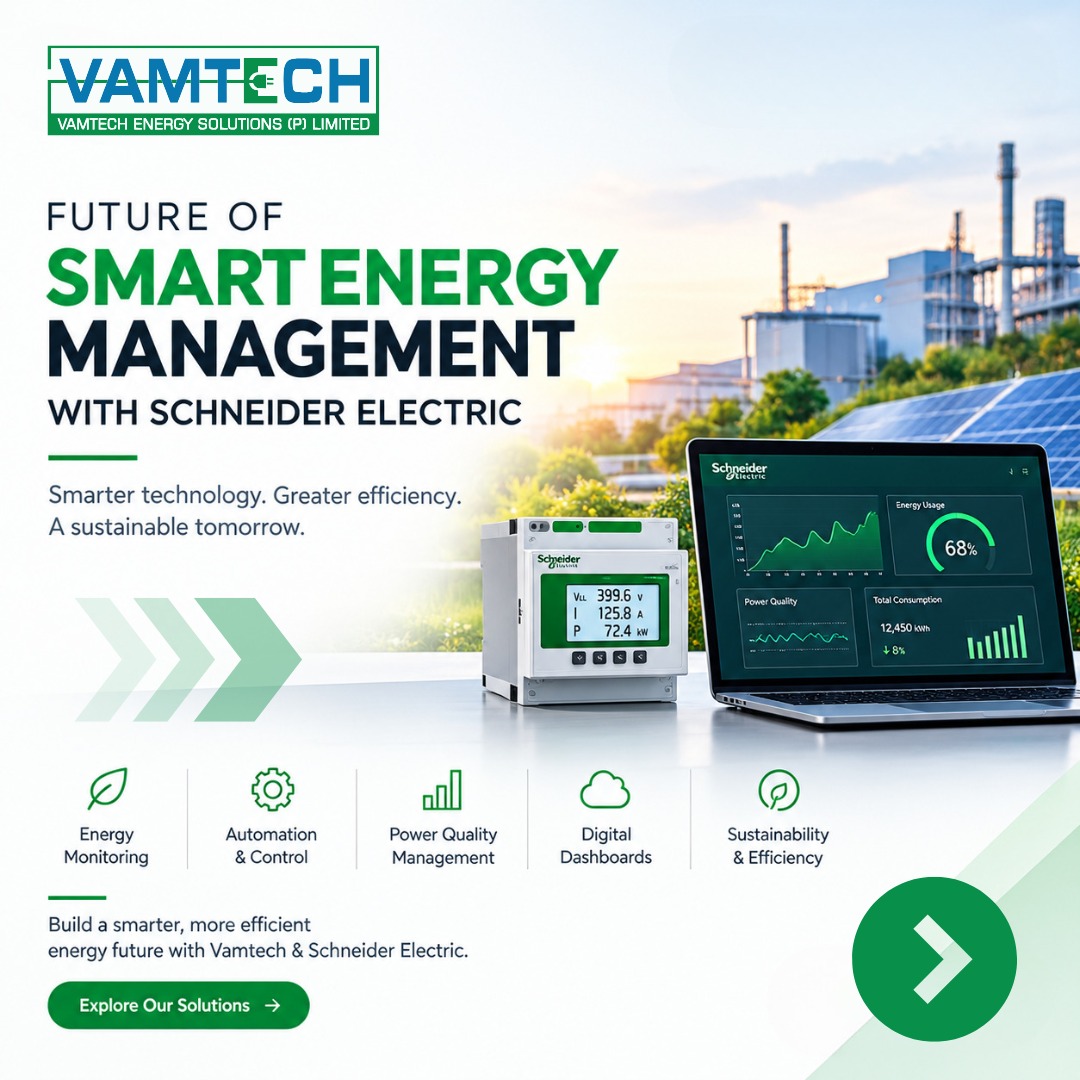
Future of Smart Energy Management with Schneider Electric
Introduction
The future of industrial energy management is moving beyond simply monitoring electricity consumption. Businesses today need real-time visibility, intelligent automation, predictive insights, and better control of their energy infrastructure to improve efficiency, reliability, and sustainability.
With rising energy costs, increasing automation, and growing sustainability requirements, industries are looking for smarter ways to manage electrical systems. Technologies from Schneider Electric help organizations connect electrical infrastructure with digital energy-management platforms, enabling businesses to monitor performance, identify inefficiencies, and make data-driven decisions.
Vamtech Energy Solutions Private Limited combines electrical engineering expertise with smart energy and automation solutions to help industries move toward more connected and efficient energy management.
Problem Statement
Traditional energy-management systems often operate with limited visibility. Many industrial facilities still depend on manual meter readings, disconnected electrical systems, and periodic energy audits.
This can create several challenges:
1. Limited Energy Visibility
Without centralized monitoring, it can be difficult to identify where energy is being consumed and where losses are occurring.
2. Unexpected Equipment Issues
Electrical abnormalities, power-quality problems, overheating, and equipment overloads can affect operations and increase maintenance costs.
3. Inefficient Energy Usage
Machines and electrical systems may continue consuming energy even when production requirements are lower.
4. Lack of Real-Time Data
Without real-time information, facility managers may only discover energy-related problems after receiving high electricity bills or experiencing equipment failures.
5. Sustainability Requirements
Industries increasingly need to reduce energy consumption and improve their environmental performance while maintaining productivity.
These challenges demonstrate why organizations need an integrated approach to smart energy management rather than relying only on conventional monitoring methods.
How We Solve It
At Vamtech Energy Solutions Private Limited, smart energy management is approached by combining electrical engineering, automation, energy monitoring, and digital technologies.
Smart Energy Monitoring
Connected electrical systems can collect important operational information such as:
- Energy consumption
- Voltage
- Current
- Power factor
- Demand
- Power quality
- Equipment performance
This information provides facility teams with greater visibility into their electrical infrastructure.
Schneider Electric Solutions
Schneider Electric's connected technologies can help businesses build intelligent electrical and energy-management environments.
Depending on project requirements, solutions can include:
- Energy monitoring
- Power management
- Electrical distribution monitoring
- Automation
- Power quality management
- Digital dashboards
- Equipment monitoring
- Data-driven energy optimization
Vamtech can help businesses evaluate their electrical infrastructure and implement suitable solutions based on their operational requirements.
From Monitoring to Action
The real value of smart energy management comes from converting data into actionable information.
For example:
Energy consumption increases → system identifies abnormal consumption → engineering team investigates equipment → corrective action is taken → energy performance improves.
This approach helps businesses move from reactive maintenance to proactive energy management.
Predictive Energy Management
Modern digital energy systems can also support predictive approaches by continuously analysing equipment and energy data.
Potential benefits include:
- Early identification of abnormal conditions
- Better maintenance planning
- Reduced unplanned downtime
- Improved energy efficiency
- Better equipment utilization
- Improved operational visibility
Case Study: Moving Toward Connected Energy Management
Client Requirement
Consider an industrial manufacturing facility with multiple production areas, electrical distribution systems, and energy-intensive equipment.
The facility was experiencing:
- Increasing energy consumption
- Limited visibility across electrical systems
- Difficulty identifying high-consumption equipment
- Manual monitoring processes
- Challenges in analysing power-quality conditions
Vamtech's Approach
Vamtech Energy Solutions evaluated the facility's electrical and energy-management requirements and proposed a connected monitoring approach using suitable Schneider Electric technologies.
The implementation approach included:
Step 1 – Electrical Assessment
The existing electrical infrastructure and energy consumption patterns were reviewed.
Step 2 – Monitoring Infrastructure
Relevant electrical parameters were connected to an appropriate monitoring architecture.
Step 3 – Centralized Visibility
Collected data was made available through a centralized digital monitoring environment.
Step 4 – Performance Analysis
Energy consumption and electrical parameters could then be analysed to identify abnormal patterns and potential areas for improvement.
Step 5 – Continuous Optimization
The collected information could support ongoing operational decisions, maintenance planning, and energy-efficiency initiatives.
Result
The connected approach provided the facility with a clearer understanding of its electrical infrastructure and energy consumption patterns.
Instead of depending entirely on periodic manual checks, the organization could use continuous data and digital visibility to support better energy-management decisions.
Note: The case study above is an illustrative industry scenario. Actual project results, savings, client names, and performance figures should only be published by Vamtech when they are verified project data.
Conclusion
Smart energy management is becoming an important part of modern industrial infrastructure. As businesses adopt automation, connected electrical systems, and digital technologies, energy management is evolving from traditional monitoring into a data-driven and intelligent operational function.
Schneider Electric technologies provide a foundation for connected energy and electrical management, while engineering expertise is essential for selecting, integrating, commissioning, and optimizing solutions for each facility.
With its focus on electrical engineering, automation, energy management, and digital solutions, Vamtech Energy Solutions Private Limited can help industries move toward a more connected and efficient energy infrastructure.
For organizations looking to modernize their electrical and energy-management systems, explore the solutions offered by Vamtech Energy Solutions Private Limited and discuss your project requirements with their engineering team.
Frequently Asked Questions
1. What is smart energy management?
Smart energy management uses connected devices, monitoring systems, automation, and digital analytics to monitor and optimize energy consumption and electrical-system performance.
2. How does Schneider Electric support smart energy management?
Schneider Electric provides connected electrical, automation, monitoring, and digital technologies that can help organizations gain better visibility and control over their energy infrastructure.
3. What are the benefits of smart energy management for industries?
Smart energy management can help industries improve energy visibility, identify abnormal consumption, support maintenance planning, improve operational efficiency, and work toward sustainability goals.
4. Can smart energy management help reduce energy consumption?
Yes. By continuously monitoring energy usage and identifying inefficient operating patterns, organizations can identify opportunities for optimization and better energy utilization.
5. How can Vamtech Energy Solutions help with Schneider Electric solutions?
Vamtech Energy Solutions Private Limited provides engineering, automation, energy-management, and digital solutions and can help businesses evaluate their requirements and implement suitable solutions for their electrical and energy infrastructure.